I am a firm believer that occasionally getting out of your comfort zone helps us expand our horizons beyond the everyday. For me, getting out of my comfort zone means travelling alone, making art, and sharing the outcome.
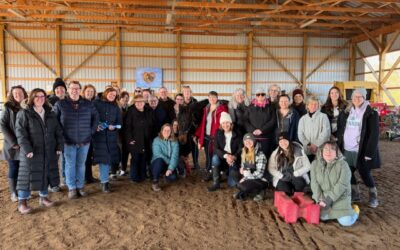
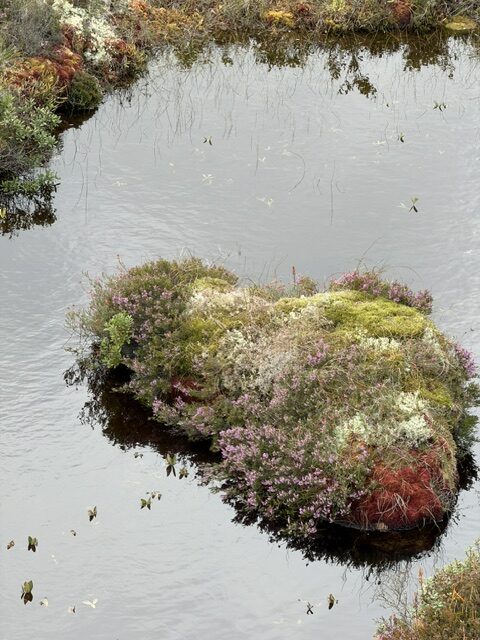
Earlier this year, I travelled to the Flow Country and northern edge of Scotland to engage in an art retreat with a group of women who also came from away. We worked with gouache (like water colour paint) – I medium I’ve never used before. The invitation was to paint our response to the land we were immersed in. I appreciated the layers, colours and textures present in the bog — an invitation to look closer.
I asked guest presenter and senior researcher Roxane Anderson (a Canadian), who was involved in making Forsinard Flow a UNESCO site, how she would describe the spirit of the bog. She shared that from a distance the bog appeared as an old women dressed in brown, but as you looked closer – you noted that she was covered in jewels. That description inspired my paintings.
On my trip, I learned the Flow Country is one of Scotland’s most important natural resources. Blanket bog is a rare type of peatland which forms only in cool places with plenty of rain and covers the landscape like a blanket. Due to the cool, wet and acidic conditions, the plants which grow here, especially the sphagnum bog mosses, don’t fully rot away when they die. Instead they build up deep layers of peat. The Flow Country’s bogs have been growing for more than 10,000 years and in some areas the peat is up to 10 metres deep. On a global scale, this land of hidden riches is rare. Scotland holds about 15% of the world’s blanket bog, and a large part of this is in the Flow Country.
It’s been estimated that the carbon store in Scotland’s peatlands represent 100 years worth of the country’s emissions from burning fossil fuels: it would be disastrous if this were to be released. Peat acts as a carbon store or ‘sink’, which is why peat bogs are so important as a defence against climate change. The Flow Country’s peat bogs store about 400 million tonnes of carbon, which is more than three times the amount in all of Britain’s woodlands.
I appreciate my privilege in being able to travel in this way. Getting out of your comfort zone is something you can do in your everyday. Here are a few ways getting out of your comfort zone can help you:
- Grow confidence: Each time you try something unfamiliar, you learn you can handle more than you thought.
- Discover new strengths and interests: New experiences can reveal abilities or passions you haven’t had a chance to explore.
- Build resilience: Facing manageable challenges helps you adapt when life is uncertain or difficult.
- Learn faster: New situations encourage curiosity, problem-solving, and fresh perspectives.
- Create meaningful connections: Trying something new can bring you into contact with people and communities you might not otherwise meet.
- Break routines: A change of pace can bring fresh energy and inspiration.
You don’t have to leap into something overwhelming. Small steps—speaking up, taking a class, sharing your work, or trying a new approach—can stretch your comfort zone while still feeling safe and manageable.