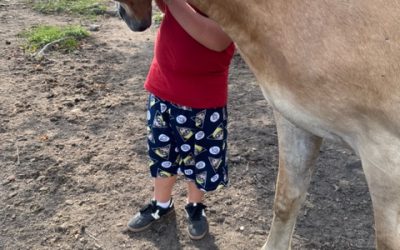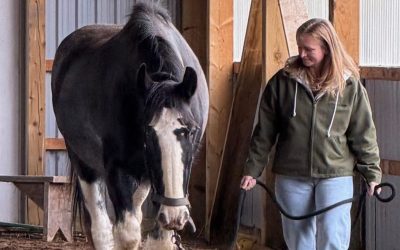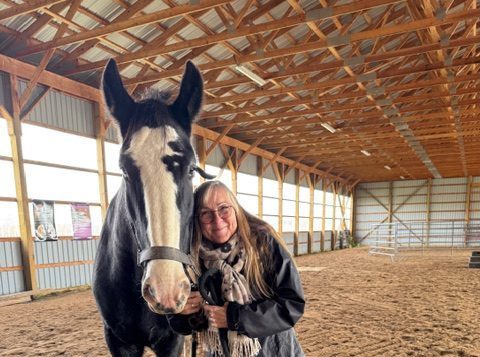
Equine-assisted therapy (EAT) supports social connection in humans in a few distinct, evidence-informed ways. Horses are highly sensitive, relational animals and interacting with a horse while being supported by a mental health professional can change how you experience yourself and others.
- Horses as social mirrors
Horses are prey animals with finely tuned awareness of body language, tone, and emotional states. They respond immediately and honestly to human cues.
- If someone is anxious, guarded, or inconsistent, the horse often reflects that (e.g., by moving away or becoming unsettled).
- When someone becomes more grounded, clear, and regulated, the horse tends to respond with cooperation or calm engagement.
This creates a powerful feedback loop where clients can see the impact of their internal state on a relationship—something that’s often harder to perceive in human interactions.
- Building nonverbal communication skills
Much of human social connection relies on nonverbal cues (posture, timing, energy). Horses primarily communicate this way.
- Clients learn to adjust their body language, boundaries, and intention
- They practice attunement—reading the horse’s signals and responding appropriately
These skills transfer directly to human relationships, improving empathy, presence, and responsiveness.
- Safe attachment experiences
For people with relational trauma, traditional talk therapy can feel threatening or overwhelming. Horses offer:
- A nonjudgmental presence
- No expectation of verbal disclosure
- Consistent, predictable responses
This allows clients to experience aspects of secure attachment—trust, safety, mutual regulation—without the intensity of human-to-human vulnerability at first.
- Co-regulation and emotional safety
Being with horses can support nervous system regulation. Research in areas like polyvagal theory suggests that calm, rhythmic interactions (e.g., grooming, leading) can:
- Reduce stress responses
- Increase feelings of safety and connection
As clients become more regulated, they’re better able to engage socially with others.
- Mastery and shared experience
Working with a large animal like a horse builds confidence and a sense of competence.
- Successfully guiding or connecting with a horse fosters self-efficacy
- In group EAT settings, clients often collaborate, problem-solve, and reflect together
This creates natural opportunities for shared social experiences, which strengthen interpersonal bonds.
- Authenticity and congruence
Horses respond best to people who are internally congruent (what you feel matches what you express).
- Clients quickly learn that “faking it” doesn’t work
- This encourages more authentic self-expression
Authenticity is a cornerstone of meaningful human connection.
Putting it together
Equine-assisted therapy strengthens social connection by helping people:
- Regulate their emotions
- Become more aware of how they show up relationally
- Practice attunement and boundaries
- Experience safe, responsive connection
Those shifts make it easier to form and sustain healthy relationships with other humans. The Mane Intent is home to 10 horses and 2 donkeys and a gaggle of goats who welcome the opportunity to connect. Give us a call to learn more about the benefits of equine-assisted psychotherapy.